

Spinal decompression is a non-surgical approach to back and neck pain that works by gently separating the vertebrae to take pressure off compressed discs and nerves. When a disc bulges or herniates, it can press on nearby nerve roots, sending pain down the arm, into the shoulder, through the hip, or down the leg. Decompression aims to reduce that pressure so the disc has room to recover and the nerve can stop firing pain signals.
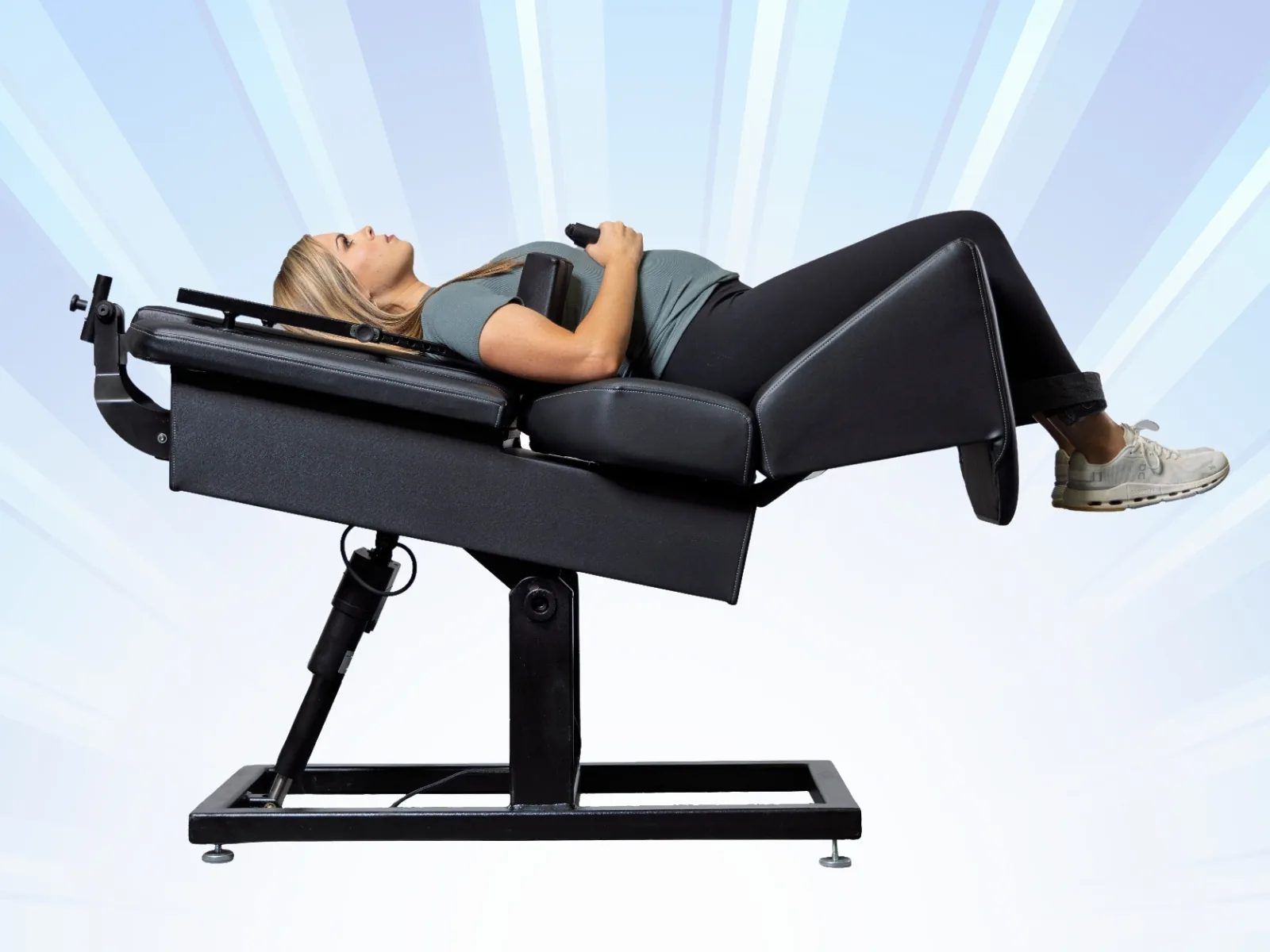
At AFC Tri-Cities, we use the Ergo Flex decompression service, which is designed to address both the cervical (neck) and lumbar (lower back) regions. Unlike older traction tables that pull in one continuous stretch, the Ergo Flex uses a controlled, intermittent decompression pattern. This approach is more comfortable for patients and gives the disc time to respond between cycles.
Decompression is most often used as part of a broader care plan rather than a standalone service. Most of our patients combine decompression with chiropractic adjustments and, depending on the case, cold laser therapy or therapeutic exercises. Our doctors will walk through what makes sense for your situation during your first visit.
Spinal Decompression is available at our Kennewick clinic, conveniently located at 8350 W Grandridge Blvd #100 — Located in the Grandridge Professional Center off W Grandridge Blvd. We proudly serve patients from across the greater Kennewick area. Learn more about our Kennewick chiropractic practice and the full range of care we provide.
The Ergo Flex service is built for both neck and lower back decompression, so we can address upper or lower spine cases with the same equipment.
No needles, no incisions, no medication. Decompression works by repositioning the spine, not by masking pain.
You stay fully clothed and seated in the chair. Most patients find the sessions relaxing rather than painful.
Decompression and chiropractic adjustments address different mechanical issues. Used together, they often produce faster results than either one alone.
Decompression intensity, session length, and frequency are set based on your specific condition and how your body responds.
Your first visit includes a full chiropractic exam. If decompression looks like the right fit, we'll explain why and walk through what your sessions would look like.
Decompression candidacy depends on understanding what's happening in the disc. We'll review any existing imaging or order new films if needed.
We'll show you exactly what we're recommending, how many sessions we expect, and how decompression fits with the rest of your care. No surprises, no pressure.
You'll sit in the Ergo Flex chair while it cycles through decompression patterns. Sessions are short and you can resume normal activity right after.
We re-evaluate as you go, adjust the protocol based on your response, and transition you toward maintenance care once your symptoms are stable.
Answers to the questions our Kennewick patients ask most about spinal decompression.
Take the first step toward better health for you and your family.

Kennewick's only chiropractic office equipped with DynaRom diagnostic testing for auto accident injuries. We document, diagnose, and help you recover from collision-related injuries with objective, court-admissible data.
Learn More
Gentle chiropractic care for expecting moms, using the Webster Technique as defined by the International Chiropractic Pediatric Association.
Learn More
Localized cold therapy for targeted pain relief, applied to specific areas of injury or inflammation.
Learn More
Our chiropractors use a variety of hands-on and instrument-assisted techniques to restore proper spinal alignment, improve nervous system function, and help your body work the way it was designed to.
Learn More
Low Level Laser Therapy uses specific wavelengths of light to stimulate cell repair, reduce inflammation, and speed up healing in damaged tissues, joints, and muscles.
Learn More
Kinesio taping provides lightweight support to muscles and joints without restricting movement. The tape helps reduce pain, manage swelling, and support your body between office visits.
Learn More